
Common plumbing problems in 1960s Westminster tract homes and how to fix them
Thousands of classic single-family homes across Westminster were constructed during Southern California's postwar suburban building boom between 1955 and 1968. Today, these neighborhoods represent the architectural backbone of west-central Orange County. While these classic ranch-style homes feature solid framing and spacious lots, their original mid-century plumbing infrastructure is now failing at an accelerating rate. Operating from our local shop on Willow Lane, our master plumbers diagnose and resolve the most persistent plumbing challenges facing Westminster homeowners.
The post-WWII tract home boom and original plumbing specifications
Between 1955 and 1968, the City of Westminster experienced unprecedented suburban expansion. Agricultural parcels previously covered with lima bean fields and citrus groves were rapidly subdivided into master-planned residential tracts. Subdivisions developed around major thoroughfares like Hazard Avenue, Goldenwest Street, Edwards Street, and Westminster Boulevard featured single-story stucco ranch homes constructed over poured concrete slab-on-grade foundations. To build thousands of homes rapidly and economically, mid-century developers adhered to contemporary building codes that today present severe mechanical liabilities. Water supply lines were constructed using thin-walled soft copper tubing laid directly into rough crushed aggregate base rock before concrete foundation slabs were poured. Concurrently, vertical water feeds and secondary waste branches utilized galvanized threaded iron pipes. Sewer laterals connecting homes to municipal mains were installed using unlined vitrified clay pipe (VCP) joined in short four-foot segments with rigid mortar collars. Six decades later, this aging infrastructure is experiencing systemic structural failure across west-central Orange County.
Slab leak mechanics: thermal friction, soil movement, and pinholes
Slab leaks represent the single most destructive plumbing failure occurring in Westminster tract homes today. Unlike homes built over raised crawl spaces where leaking pipes drip harmlessly into open air, tract homes house their pressurized domestic water supply pipes directly beneath or within structural concrete slabs. Slab leaks develop through a combination of three aggressive local factors: 1. Thermal Expansion and Abrasion: Every time hot water faucets, showers, or dishwashers run, copper hot water lines expand lengthwise. As the pipe cools, it contracts. Over decades of daily thermal cycling, uninsulated copper tubing rubs continuously against jagged sub-base stones and coarse aggregate, wearing thin spots into the outer copper wall until a high-pressure pinhole leak erupts. 2. Soil Hydrodynamics and Seismic Settlement: Westminster is situated on the alluvial coastal plain of the Santa Ana River basin, characterized by expansive clay-rich soils. During seasonal rainy winters, clay soils absorb moisture and swell; during dry summers, they shrink and subside. These subtle micro-shifts, combined with Southern California seismic tremors, flex rigid concrete slabs and exert intense bending stress on buried copper joints. 3. Aggressive Groundwater Mineral Chemistry: Municipal tap water in Westminster—supplied predominantly from the Orange County Water District (OCWD) groundwater basin—averages 14 to 20 grains per gallon of mineral hardness. Over time, high velocity water combined with dissolved mineral salts triggers internal galvanic erosion and pitting corrosion along internal copper pipe walls.
| Pipe Material | Expected Lifespan | Hard Water Scale Resistance | Slab Leak Risk | Installation Disruption |
|---|---|---|---|---|
| Original Galvanized Steel | 40–50 Years (Obsolete) | Poor (Severe rust tuberculation) | High (Thread joint corrosion) | High (Rigid steel replacement) |
| Type L Hard Copper | 40–60 Years | Moderate (Vulnerable to pitting) | High if buried in slab aggregate | Moderate (Soldered in-wall lines) |
| Uponor PEX-a Expansion | 50+ Years (25-yr warranty) | Immune (Zero mineral scale adhesion) | Zero (Routed overhead in attic) | Minimal (Surgical drywall cuts) |
Galvanized steel pipe corrosion and low water volume
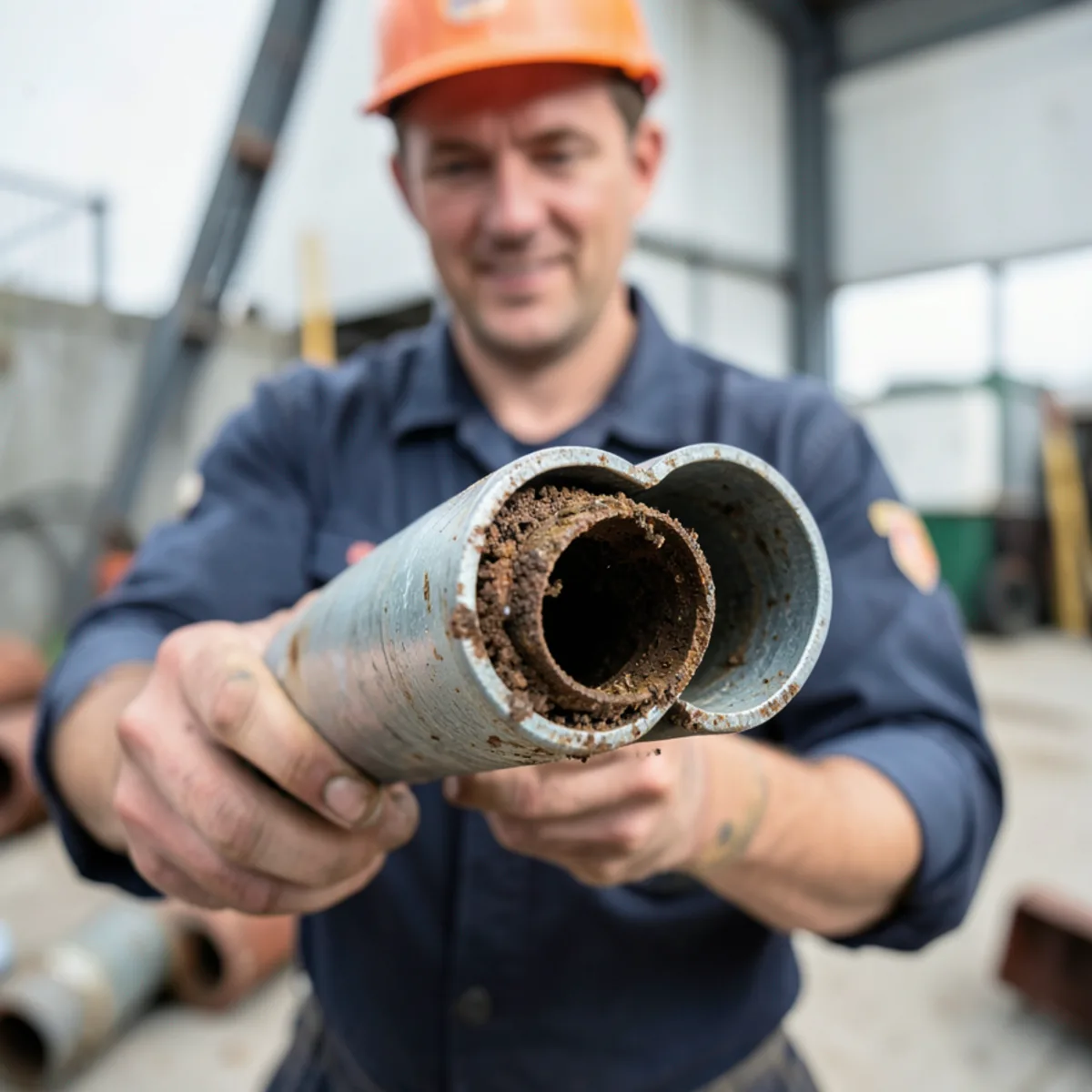
Many Westminster homes still retain sections of original galvanized iron water distribution pipes dating back to the late 1950s. Galvanized steel pipes consist of iron tubing coated with a protective outer zinc layer. Over 50 to 60 years of continuous water exposure, this protective zinc coating completely dissolves, exposing bare iron to oxygenated municipal water. As the raw iron oxidizes, it produces internal rust tuberculation—jagged, calcified mineral and rust deposits that accumulate along the interior pipe wall. Over time, the internal diameter of a 3/4-inch supply pipe chokes down to the diameter of a pencil lead. Homeowners experience this degradation as severely restricted water volume: when a shower is running and someone flushes a toilet or starts the laundry machine, shower pressure plummets to a trickle. Furthermore, oxidizing iron discolors tap water, releasing yellow or brownish rust stains that ruin white laundry and stain porcelain bathroom sinks.
Overhead Uponor PEX-a repiping vs destructive sub-slab spot repairs
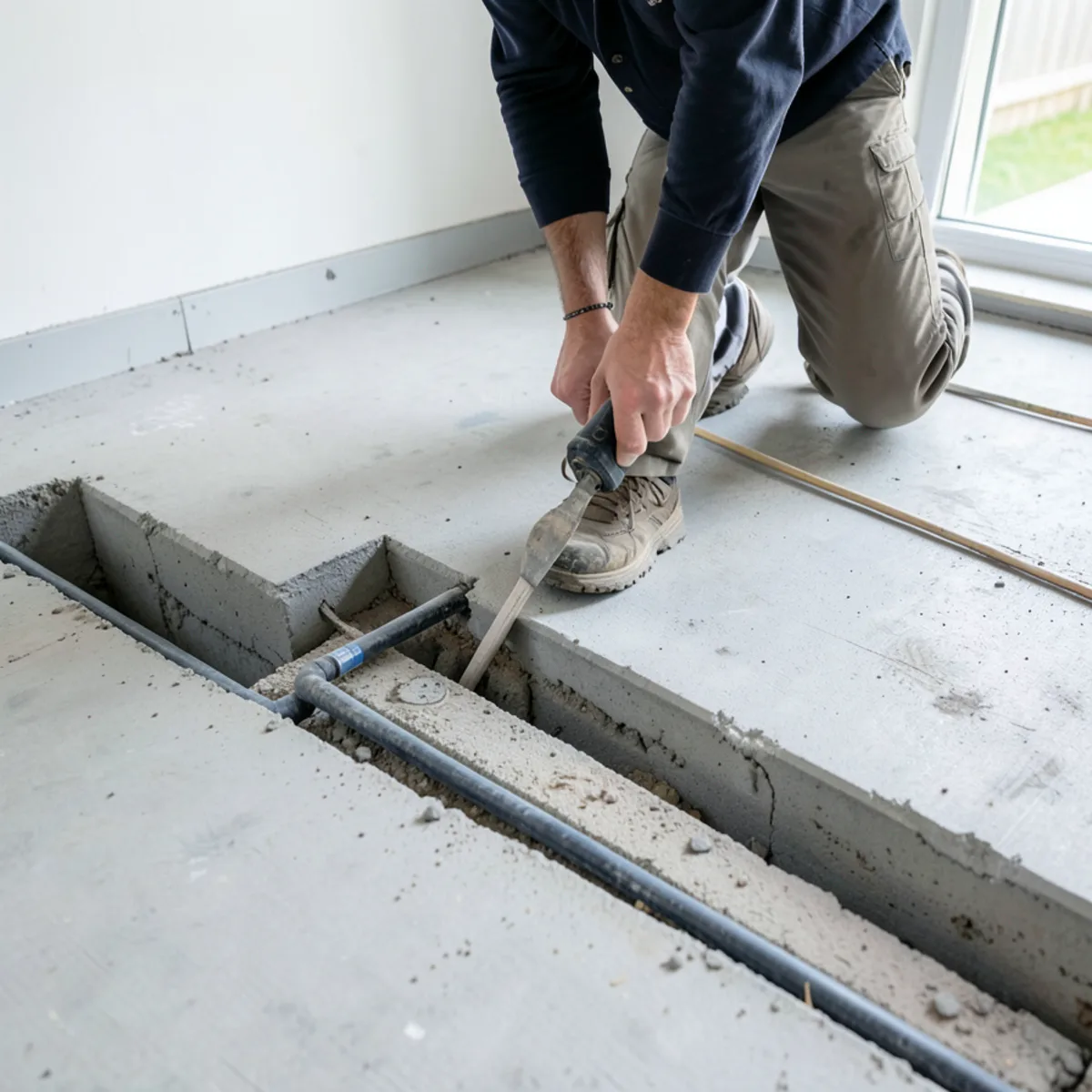
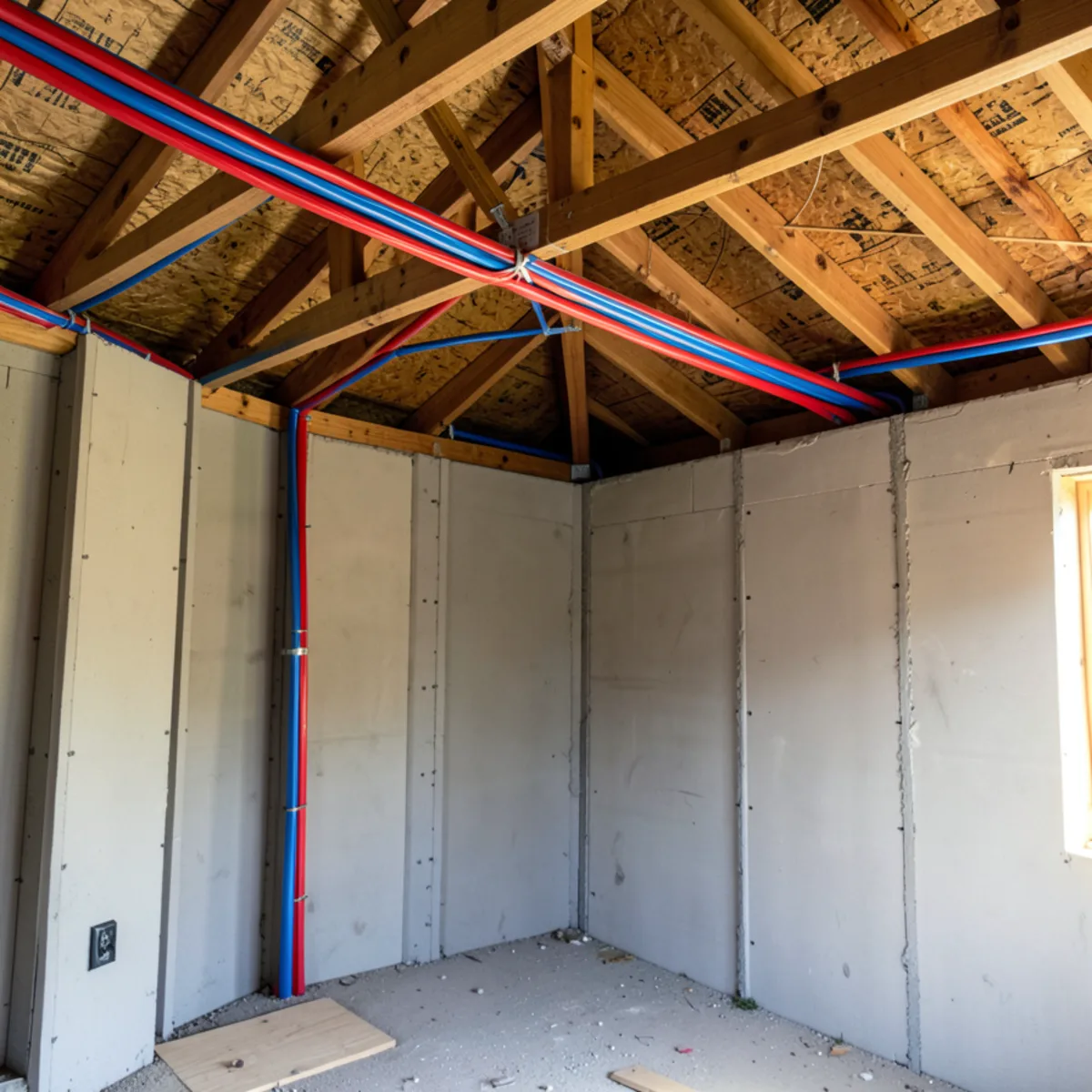
When a slab leak or galvanized pipe failure strikes, homeowners must choose between a localized spot repair or a whole-home overhead repipe. A localized spot repair involves jackhammering through finished tile or hardwood flooring and breaking foundation concrete to solder a single copper coupling onto the ruptured pipe. However, spot repairs do not address adjacent weakened sections of the same aged line, and patching one pinhole frequently creates a pressure spike that triggers a secondary leak feet away within months. The modern, permanent solution is an overhead repipe utilizing Uponor PEX-a (cross-linked polyethylene) expansion piping. Our repiping specialists abandon failing, corroded sub-slab pipes entirely in place, eliminating the massive mess and structural trauma of jackhammering finished interior concrete. We route continuous, flexible Uponor PEX-a lines through attic spaces, installing individual shutoff stops at every plumbing fixture to provide homeowners with complete isolation control. We route continuous, flexible Uponor PEX-a lines through the attic space, dropping down inside interior drywall cavities directly behind each fixture. PEX-a expansion piping is completely immune to mineral scale pitting, resists freezing without bursting, requires fewer mechanical fittings, and can be installed with surgical drywall incisions that preserve structural foundation concrete.
Sewer lateral deterioration in vitrified clay pipes
Underground sewer laterals in Westminster tract homes present an equally pressing concern. Original vitrified clay sewer pipes (VCP) were installed in short four-foot sections connected with brittle mortar joints. Over six decades of soil subsidence and tree growth, roots from mature landscape trees (such as ficus, eucalyptus, and magnolia) penetrate microscopic hairline fissures in mortar joints, feeding on nutrient-rich wastewater. Once inside the pipe, root clusters expand into dense fibrous mats that trap toilet paper and food solids, causing recurrent whole-house sewage backups. Modern diagnostics utilize fiber-optic video cameras equipped with 512 Hz radio locators to map root damage precisely. Instead of excavating landscaped yards and concrete driveways, our team deploys trenchless Cured-in-Place Pipe (CIPP) epoxy lining, pulling a resin-saturated liner through an exterior cleanout to form a seamless, root-proof pipe with a 50-year design life.
City of Westminster permits and California Title 24 compliance
All major plumbing upgrades and repiping projects in Westminster must comply with California Plumbing Code standards and require official building permits issued by the City of Westminster Building Division (located at 8200 Westminster Blvd). Under California Business and Professions Code § 7028, substantial plumbing repairs must be executed by a licensed California C-36 plumbing contractor. City building inspectors conduct a mandatory rough-in inspection to verify proper pipe strapping, nail-plate protection against drywall screws, static hydrostatic pressure testing (holding 100 PSI without pressure drop), and water heater seismic strapping before walls can be closed. Our team manages all permit applications, engineering plans, and municipal inspection scheduling on your behalf.
Related services & neighborhood service areas
Explore services and service areas directly related to this guide.
Related Plumbing Services
Need professional plumbing diagnosis in Westminster?
Call (207) 419-2600. Direct technician dispatch from Willow Lane. Upfront estimates, no hidden fees.